
Last updated November 21, 2026
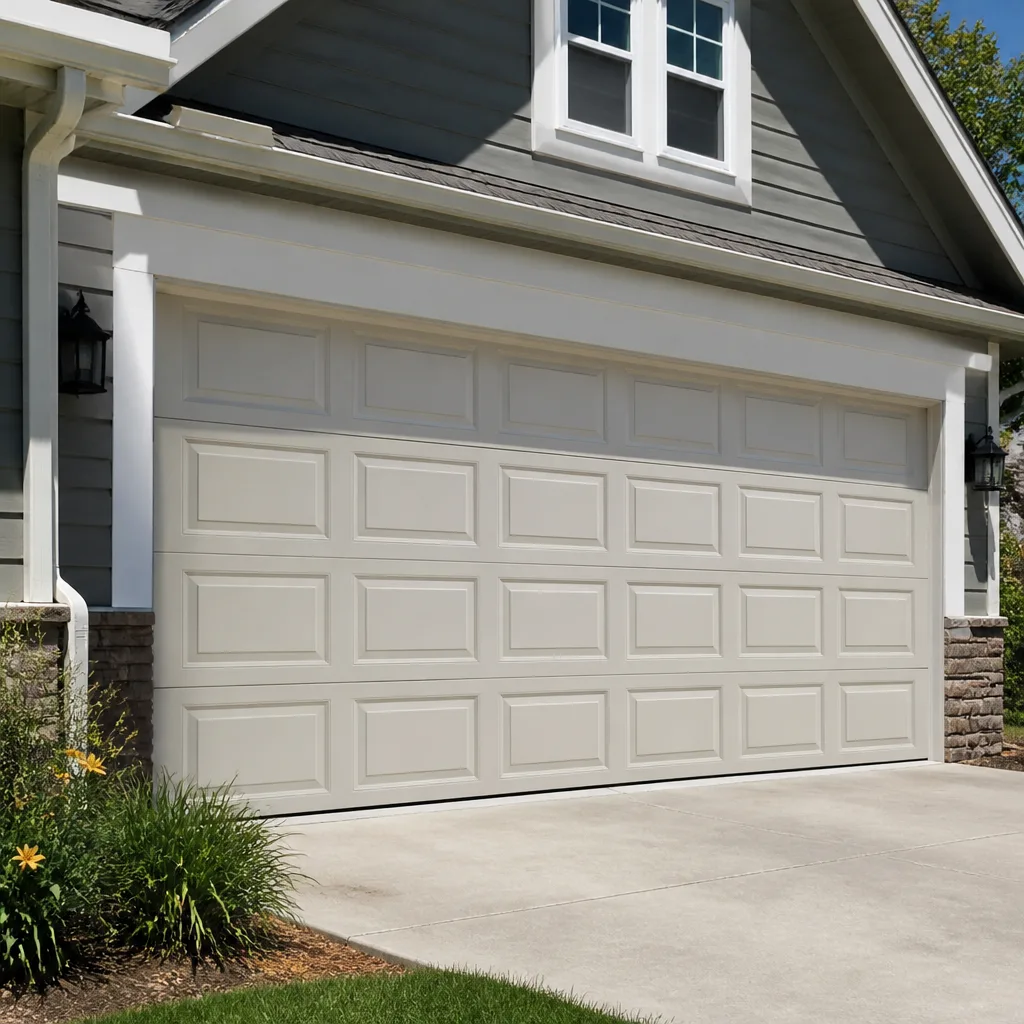 Raised-panel steel
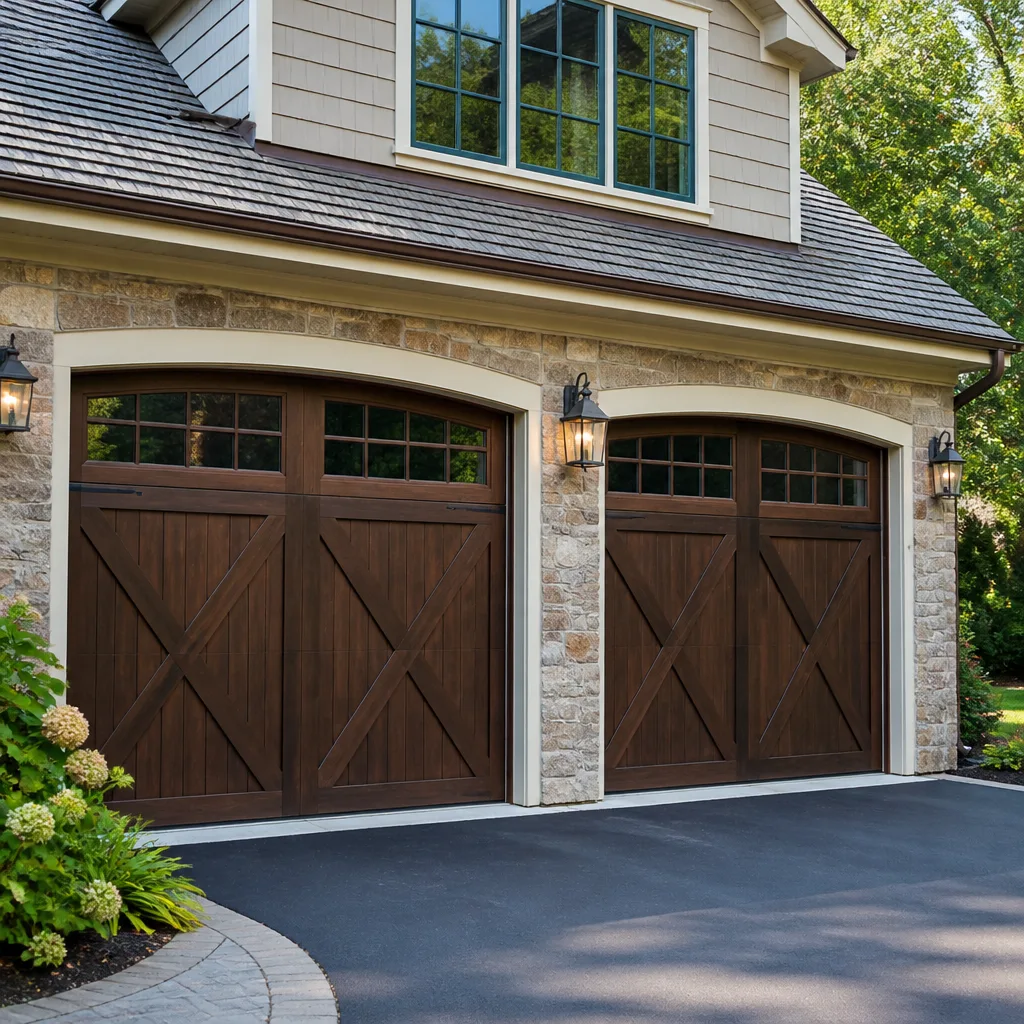 Carriage house
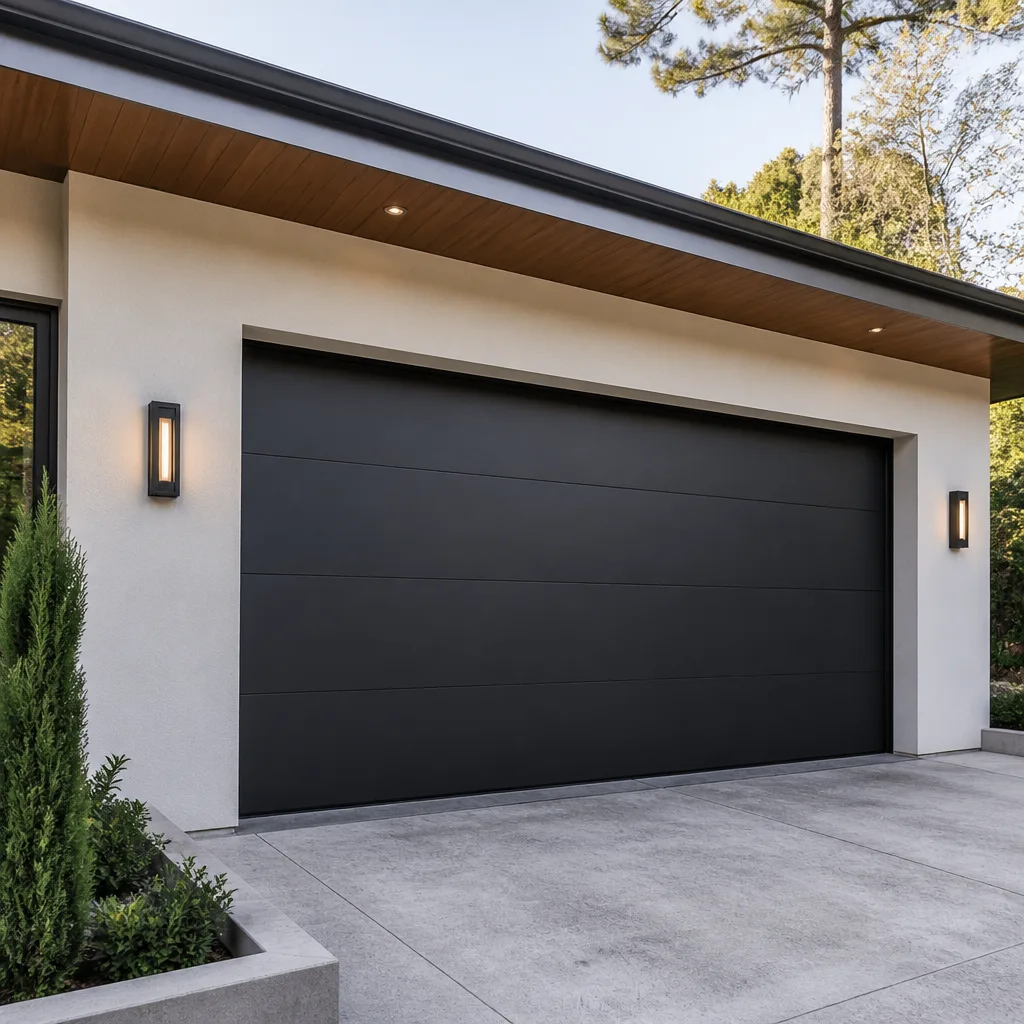 Modern flush
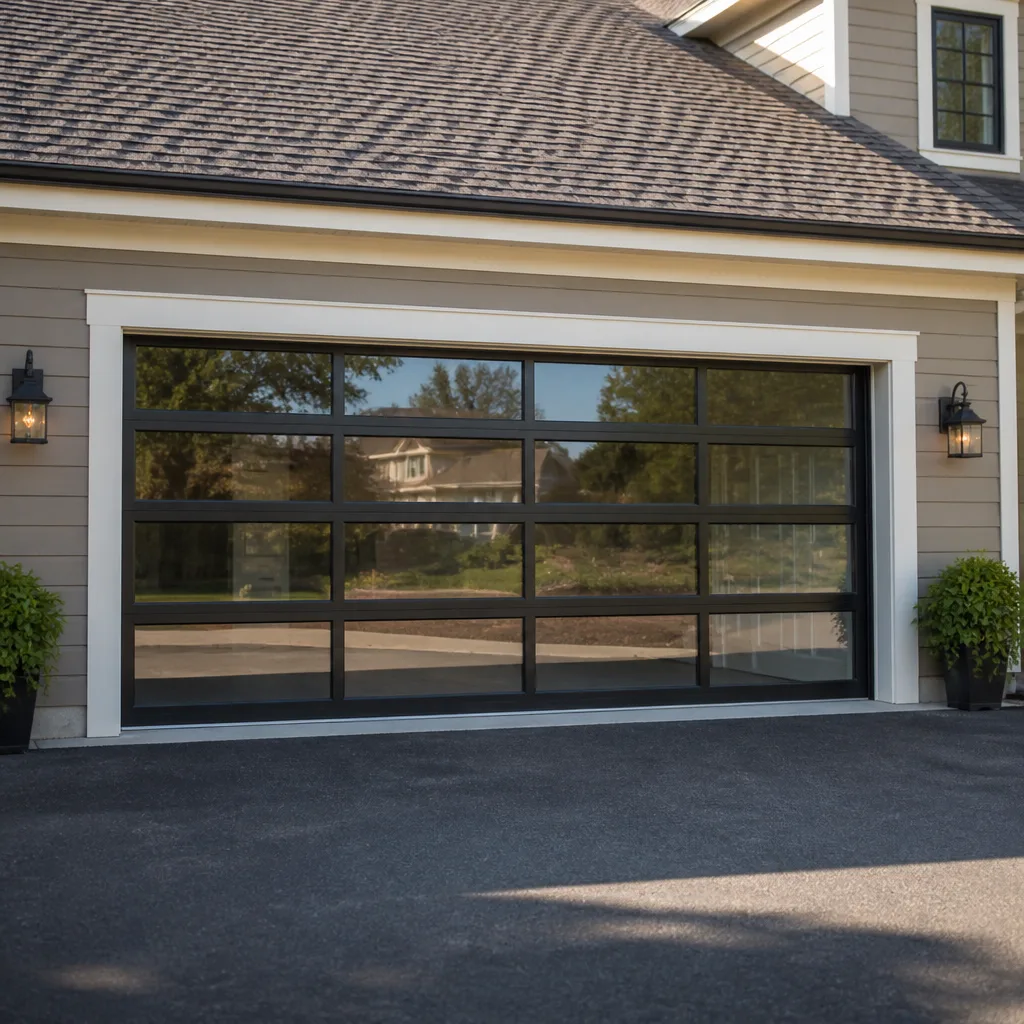 Full-view glass
 LiftMaster openers
 Chamberlain openers
Full 25-point door and opener safety check with every visit - springs, cables, rollers, tracks, and your LiftMaster or Chamberlain opener included
You get a price before we start. It does not change when the pro arrives.
Get your free estimateHow to Hire a Garage Door Contractor in Hilltop: A Step-by-Step Guide
Ohio does not require a statewide specialty license for garage door installation or repair. That single fact reshapes how you should shop for a contractor in Hilltop. There is no state board to check, no license number to look up, and no exam that separates someone who has set a torsion spring from someone who watched a video once. The only filter between you and an unqualified contractor is the set of questions you ask before you sign anything. This guide walks through those questions in order: what insurance paperwork to demand, how to spot a specialist in the first ten minutes, what a fair quote looks like line by line, and how to compare two bids that were never written the same way. By the end you’ll know how to hire with confidence in Hilltop instead of hope.
Quick Answer
To hire a garage door contractor in Hilltop, verify general liability and workers’ comp coverage with a certificate of insurance, ask for brand-specific familiarity with the system already in your garage, demand itemized quotes with part numbers, and confirm in writing both the manufacturer warranty passthrough and the contractor’s own labor warranty. Ohio does not license this trade at the state level, so documentation and specific answers replace the license check. Read every scope line before you compare prices.
Styles & brands we work with
- Raised-panel steel
- Carriage house
- Modern flush
- Full-view glass
- LiftMaster openers
- Chamberlain openers
Table of Contents
- Does Ohio License Garage Door Contractors?
- What Insurance Documentation Should You Request?
- Specialist vs. General Handyman: What’s the Difference?
- How to Read a Garage Door Quote
- How to Evaluate Warranties
- How to Compare Multiple Quotes Fairly
- Which Repairs Are Too Dangerous for DIY?
- Common Mistakes to Avoid
Does Ohio License Garage Door Contractors?
No. Ohio has no statewide specialty licensing requirement for garage door contractors, which means anyone with a truck and a tool bag can advertise installation and repair work in Hilltop. That’s the core difficulty of hiring here, and it’s worth understanding what it does and doesn’t tell you. It doesn’t mean every unlicensed contractor is bad. It does mean you can’t use a license number as your first filter, so you have to build a different checklist.
What you can verify instead:
- Business registration. Ask for the legal business name and check it against the Ohio Secretary of State’s business search. A contractor operating under a name with no registration is a warning sign.
- Physical business identity. A real company can produce a business card, an invoice with a business name, and a documented address for correspondence. A cell number and a first name is not a business identity.
- Insurance certificates. Covered in the next section, but this is the closest thing to a license substitute in a no-license state.
- Brand and model familiarity. A technician who recognizes your Wayne Dalton door or Craftsman opener on sight has done the work before. Ask what brands they service; the answer should be specific and unprompted.
Some Ohio municipalities add their own registration or permit requirements for structural or electrical work. Garage door installation and opener wiring can brush against both, depending on the job. Ask your city’s building department directly whether a permit applies to your specific project. In Hilltop, the building department is the authority, not a contractor’s opinion, so get the answer in writing if the job is a full replacement.
If a contractor tells you “Ohio licenses us,” that’s either a misunderstanding or a bluff. Either one is a reason to move on. The honest answer is that this trade is largely unregulated at the state level, and the best contractors will tell you so plainly. When you’re ready for the work itself, our Garage Door Repair Hilltop page covers what a proper service visit involves.
What Insurance Documentation Should You Request?
Ask for a certificate of insurance (COI) before any technician arrives, and read it. A contractor saying “we’re insured” is not documentation. A COI is a one-page form issued by the contractor’s insurance carrier, and it lists exactly what coverage exists, who it covers, and when it expires. This matters more in a state with no specialty licensing because insurance is often the only financial backstop if something goes wrong on your property.
Here is what to look for on the COI:
- General liability coverage. Confirm the policy is active, the coverage dates are current, and the named insured matches the company you’re hiring, not a different business name.
- Workers’ compensation. Ask specifically whether workers’ comp is included. If a technician is injured on your property and the contractor has no workers’ comp coverage, the exposure can land on you as the homeowner. This is the single most overlooked line on the form.
- Policy limits. Look at the per-occurrence limit, not just whether a policy exists. A token policy with a low limit offers little protection for structural damage.
- Certificate holder. Ask the contractor to have their carrier list you as the certificate holder. That gives you documentation tied to your address.
- Verification, not just receipt. Call the phone number on the COI and confirm the policy is active. Certificates can be edited; carrier records can’t.
A contractor who hesitates, deflects, or promises to “get you the paperwork later” is telling you something. Legitimate companies keep current COIs on file and send them without friction. This is a normal request, not an insult. Ask it before the appointment is booked, and hold the booking until the paperwork arrives.
Specialist vs. General Handyman: What’s the Difference?
The difference shows up in the first ten minutes, and it’s the difference between a diagnosis and a guess. A garage door specialist arrives already knowing the mechanics in front of them: how torsion springs load, how the opener’s force settings interact with door weight, how a slightly bent track changes the whole system’s travel. A general handyman arrives and starts from scratch, which means the first ten minutes are spent figuring out what they’re looking at rather than what’s wrong.
Here’s what a specialist can typically tell you quickly that a generalist cannot:
- The failure point. Whether the problem is spring tension, opener logic board, travel limit settings, or hinge and roller wear, and how each one presents differently.
- Door weight and balance. A balanced door should hold position when opened halfway. A specialist checks this in under a minute and knows what the result means for the opener’s lifespan.
- Opener model behavior. If your LiftMaster is flashing a specific code pattern, a technician familiar with the brand knows what that pattern indicates before touching a meter.
- Parts availability. Whether the part is a stock item or a specialty order, and what the realistic timeline is.
This is why brand familiarity matters. A contractor who regularly works on LiftMaster, Chamberlain, Genie, and Craftsman openers, and on doors from Clopay, Amarr, Wayne Dalton, and Raynor, doesn’t need to reverse-engineer your equipment. The diagnostic becomes a confirmation of a known failure mode rather than an investigation. That single factor affects how accurate the quote is and how likely the first repair attempt actually fixes the problem.
When you’re scheduling the visit, ask which brands the contractor services and listen for specifics. A vague “we work on everything” is less reassuring than a technician who asks for your opener’s model number before arriving. Our technicians have up to 8 years of experience, and the questions they ask on the phone tend to give that away. If you already know the repair is needed, this is also the point to line up garage door repair with a specialist rather than a generalist.
How to Read a Garage Door Quote
A fair garage door quote is itemized, names parts, and describes the scope of labor in plain language. A quote that says “repair door – $350” tells you nothing and protects no one. The line items are what you actually compare, so insist on them before comparing a single number. A shortcut here is where most homeowners in Hilltop end up with scope mismatches, and the price comparison becomes meaningless.
A quote worth signing should include:
- Each part, named and numbered. “Torsion spring, .250 x 2″ x 33″, single spring” is a line item. “Springs – $200” is a placeholder.
- Labor described as a scope, not a word. “Remove and replace two torsion springs, rebalance door, test opener travel limits” is a scope. “Labor included” is a contract problem waiting to happen.
- The quantity being replaced. A spring tariff for a single spring is not the same as a matched pair. Ask whether the quote is for one spring or a pair, and make sure the number reflects it.
- What’s excluded. A contractor replacing a spring doesn’t automatically include track realignment or a new opener. The exclusions should be spelled out, not assumed.
- The final price in writing. The written estimate sets the price. Anything not in the quote is a change order, and a change order should be agreed before the work continues, not after.
If a quote won’t be put in writing, that’s your answer about how the job will go. A written estimate protects both parties and removes the most common dispute: who agreed to what. For a job like a full replacement, this is also the point where you’d compare garage door installation quotes, and the itemization matters even more because the door, hardware, and labor are all separately priced.
How to Evaluate Warranties
There are two warranties in every garage door job, and they cover different things. The manufacturer warranty covers the parts and materials itself. The contractor labor warranty covers the work of installing them. A quote that mentions “warranty” without separating the two is only telling you half the story. Ask about both, in writing, and make sure the labor warranty lives on the contractor’s own paperwork rather than a verbal promise.
What each warranty typically covers and doesn’t:
| Coverage type | Covers | Typically excludes |
|---|---|---|
| Manufacturer parts warranty | The spring, door, opener, or hardware itself, against defect | Labor to remove and replace, shipping, damage from misuse or improper installation |
| Contractor labor warranty | The installation work, for a defined period after the job | The part cost if the part itself is what failed |
- Ask how the manufacturer warranty is passed to you. Some brands register warranties to the original contractor. If you sell the home or switch contractors, the coverage may not follow.
- Get the labor warranty term in writing. A handshake labor warranty is worth very little after the technician leaves.
- Ask what happens if a covered failure occurs. Who you call, who pays for the return visit, and how the part gets replaced.
A contractor who can describe both warranties clearly and put them on the estimate has done this before and understands the accountability. Someone who mumbles “it’s covered” and moves on is likely describing a manufacturer warranty they don’t control, which means you’ll still pay for labor if it fails.
How to Compare Multiple Quotes Fairly
Comparing garage door quotes line by line is the only way to compare them at all, and most homeowners get this wrong by comparing totals. Two quotes that look like apples and oranges are almost always a scope mismatch: one includes a new opener, one doesn’t; one quotes a pair of springs, one quotes a single; one lists disposal of the old door, one doesn’t. The total tells you nothing until the line items align.
Here’s how to compare properly:
- Ask every contractor for the same document. Request an itemized, written estimate from each one and tell them you’ll be comparing line for line. The good ones will send it without fuss.
- Build a comparison sheet. One column per quote, one row per part and labor scope. The quotes that don’t fit the row are the ones with hidden scope.
- Normalize the scope. If one quote covers a pair of springs and another covers one, ask the single-spring contractor to re-quote for the pair. A matched pair is typically replaced together, so this is a real scope difference, not a technicality.
- Check the warranty columns too. A quote with a longer labor warranty is a different offer, even if the price matches.
- Ask what the final price changes on. The written quote is the price. Confirm that in writing before signing, including whether any additional work would be a separate written estimate.
Get at least three quotes. Three is the number where the outliers become obvious: the very low quote that’s missing scope, and the very high quote that’s bundling work you didn’t ask for. When you’re comparing opener work specifically, our garage door opener repair page breaks down the common failure modes, which helps you tell a legitimate opener line item from a padding one. A fair quote explains why the opener is being replaced, not just that it will be.
Which Repairs Are Too Dangerous for DIY?
Torsion springs and the cables under tension are genuinely dangerous and should be handled by a trained professional. A wound torsion spring stores an enormous amount of energy; if it lets go while someone is working on it, the injury can be catastrophic. Extension springs carry the same risk. This is not a matter of being careful. It’s a matter of the stored energy being incompatible with a homeowner tool set.
Repairs and adjustments that should always be professional work:
- Torsion spring replacement. Even a standard spring swap requires winding bars, the right bar size for the wire gauge, and a safe sequence. It’s not a first-timer job.
- Cable replacement. Cables run under tension and can slice; the tension must be released properly before any cable work.
- Track realignment after damage. A door that’s come out of its tracks is under load and can fall. Leave it and call a professional.
- Opener electrical or logic board work. The high-voltage side and the safety sensors both need testing and adjustment that a specialist does routinely.
What a homeowner should do instead: inspect the door visually, listen for irregular sounds, check that the safety sensors are aligned, and test the balance of the door by hand. Anything beyond that is a call to a technician. If a door is stuck or partially off its tracks, don’t force it; the risk is the door coming down. A local pro we connect you with is state-licensed as their state requires and insured, and handles the hazardous portions of the repair with the right equipment. If you’re in a Hilltop home with an older door that hasn’t had service in years, a spring inspection is the first thing to book, not the last.
Common Mistakes to Avoid
- Asking “are you insured?” and accepting “yes.” Ask for the COI, read the coverage dates, and call the carrier to confirm. A yes without paperwork tells you nothing.
- Comparing total prices instead of line items. A $400 difference between two quotes is almost always a scope difference, not a price difference. Build the comparison sheet before you decide.
- Accepting “labor included” on a quote. That phrase hides the scope, and hidden scope is where the disagreement starts when the technician is already at your door.
- Booking before asking which brands they service. If the technician doesn’t recognize your opener model on the phone, the first ten minutes on-site will be spent learning it instead of fixing it.
- Hiring to skip the mailbox. A flyer with a cell number and no business identity, business registration, or COI is a red flag in a trade with no state licensing to fall back on.
- Forgetting the permit question. A full door replacement may need a call to Hilltop’s building department. Ask before the job is scheduled, not after.
- Signing before the written estimate. The written estimate sets the price. A verbal price and a written price are two different numbers waiting to happen.
See the difference
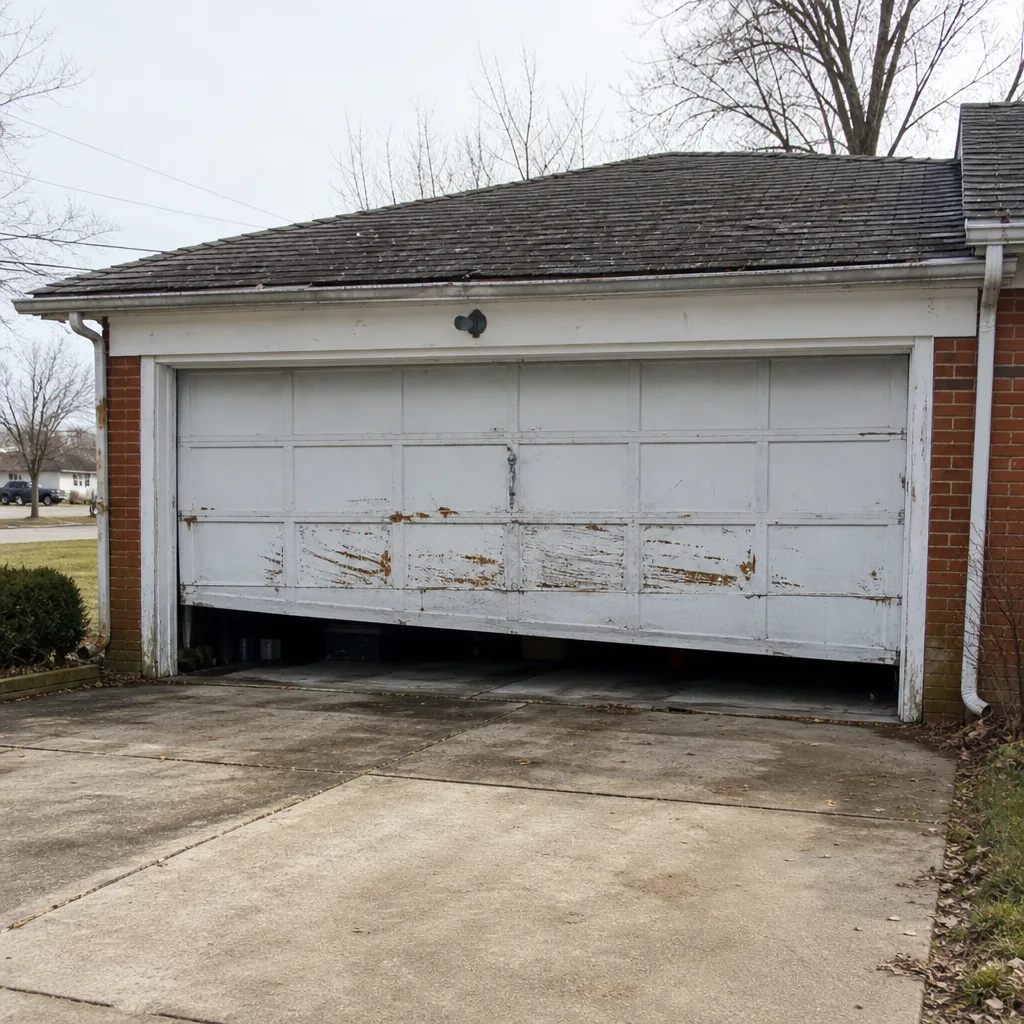 Before
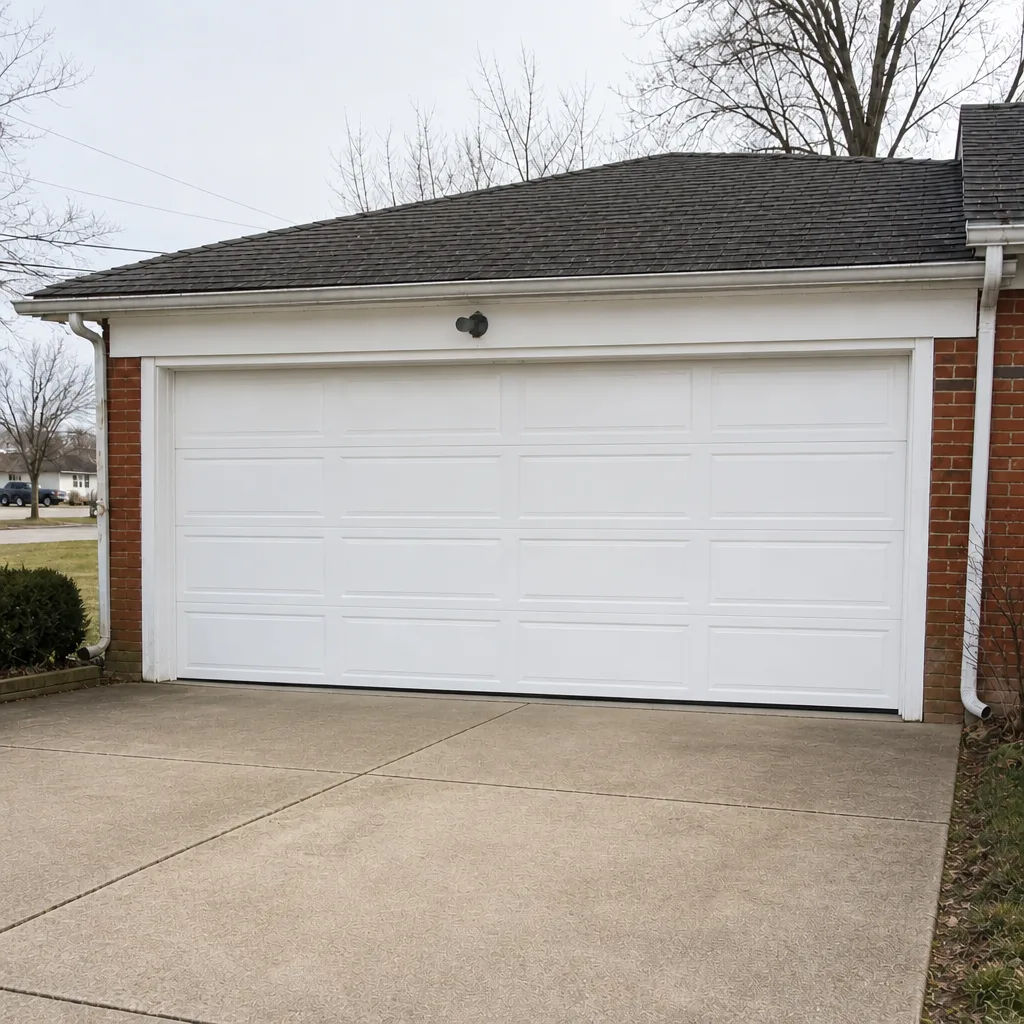 After
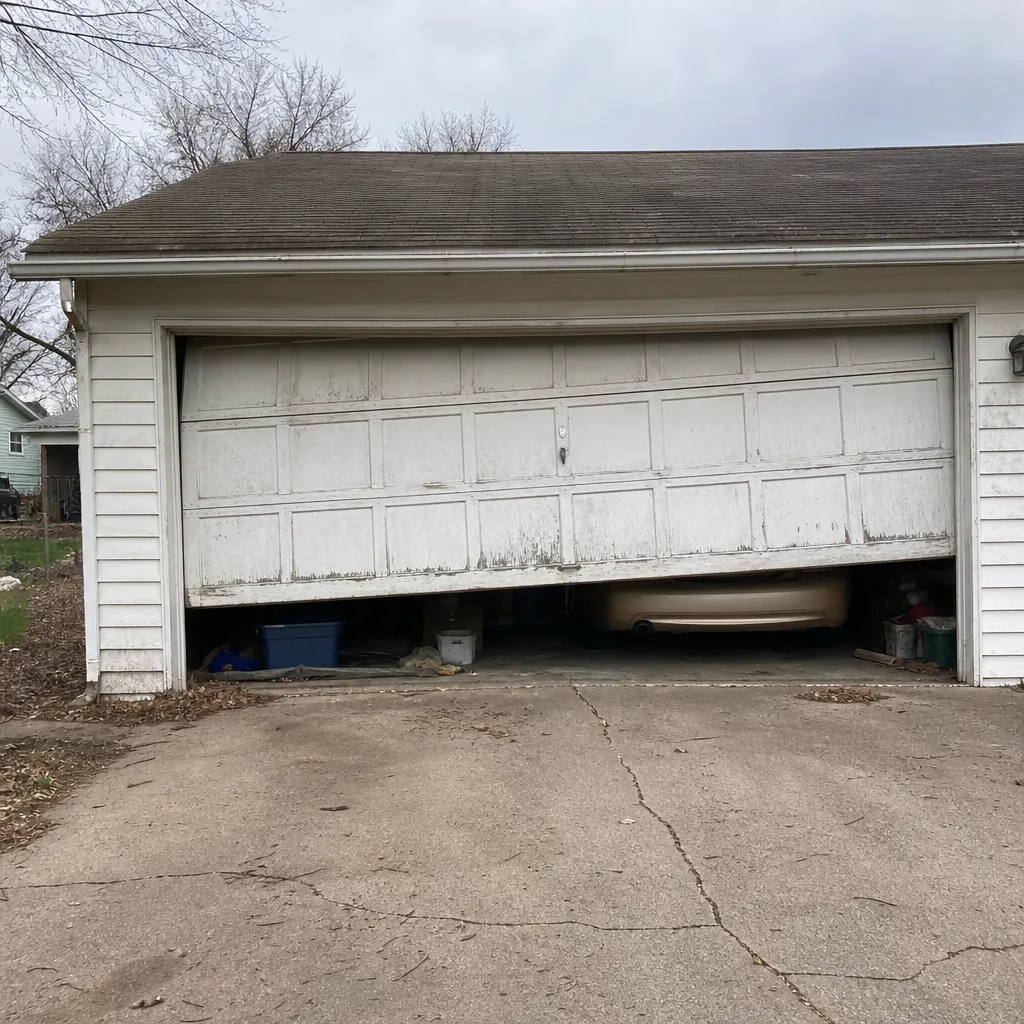 Before
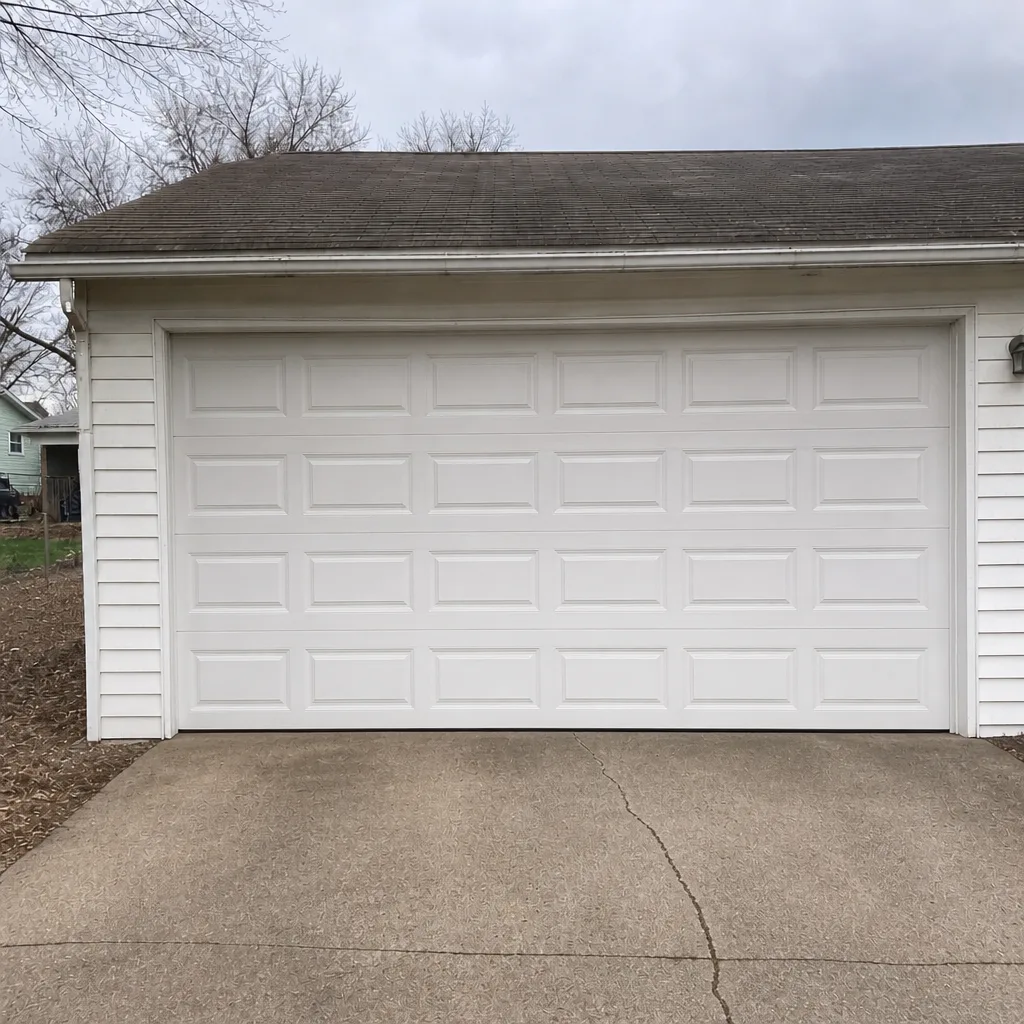 After
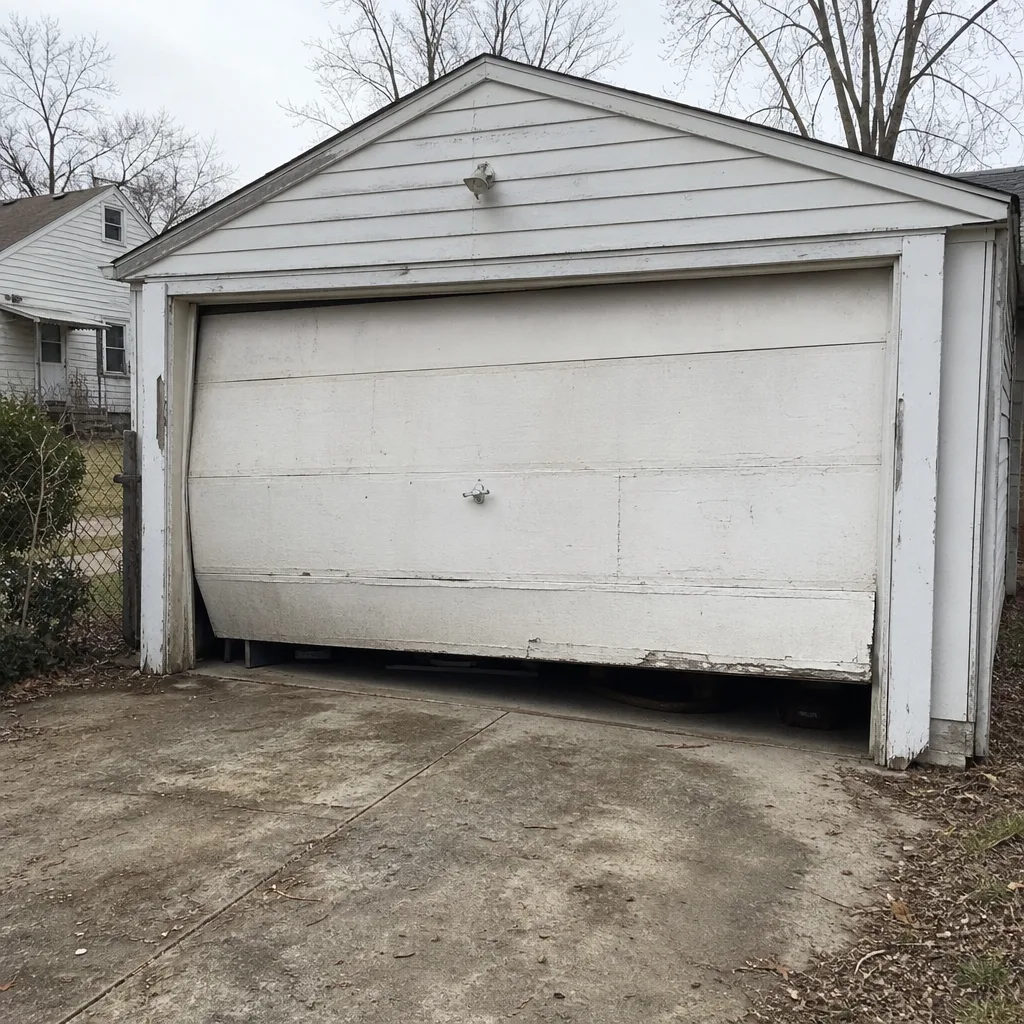 Before
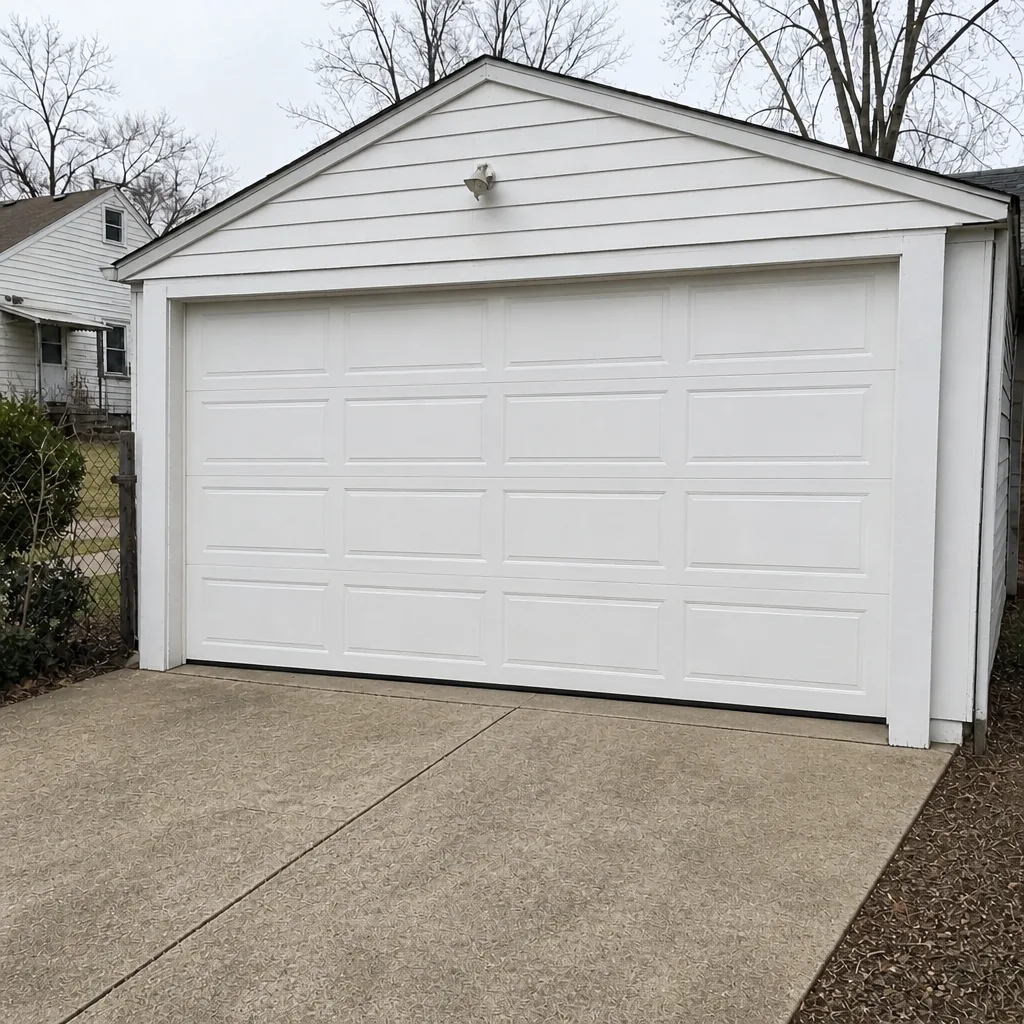 After
When to Call a Professional
Call a professional when the door won’t open or close, when you hear a loud bang from the spring area, when the door comes out of its tracks, when the opener reverses unexpectedly, or when you’re replacing a door rather than repairing it. Call also if a spring has visibly broken or the door is unbalanced enough to hold its own weight poorly. These are the cases where a generalist’s guess and a specialist’s diagnosis diverge most, and where the risk of a second repair on the same job is highest. Garage Door Repair Hilltop offers free estimates in Hilltop – call (866) 558-3346. We answer 24/7. Fast dispatch from 7am to 7pm, Sunday through Friday.
Frequently Asked Questions
Ohio does not require a statewide specialty license for garage door work, so there is no state license number to verify. Instead, confirm the business registration, request a certificate of insurance, and ask directly about brand familiarity and warranty terms. Call (866) 558-3346 for a free estimate – we’ll walk you through what we document before any work begins.
Ask for current general liability coverage and workers’ compensation, documented on a certificate of insurance issued by the carrier. Workers’ comp is the piece most homeowners overlook; without it, an injury on your property can become your exposure. Verify the policy by calling the number on the certificate before you book. Call (866) 558-3346 to request documentation for a free estimate.
Get at least three itemized written estimates and compare them line by line rather than by total. Three quotes is enough to spot the outlier whose low price reflects missing scope. Ask each contractor for the same document so the comparison stays fair. Call (866) 558-3346 for an itemized free estimate on your garage door.
The written estimate sets the price. If the technician finds something the quote didn’t cover, that’s a separate written estimate you agree to before the work continues, not a surprise line on the invoice. Ask every contractor to confirm this in writing before signing. Call (866) 558-3346 for a written estimate – estimates are free.
Ask which brands they service and whether they want your opener model before arriving. A specialist who works regularly on LiftMaster, Chamberlain, Genie, and Craftsman openers will often recognize a fault code or failure mode over the phone. A vague answer is a reason to keep asking. Call (866) 558-3346 and have your model number ready.
The local pro we connect you with is licensed and insured as their state requires. Ohio doesn’t issue a specialty garage door license, so the insurance certificate is the key document to request. You can verify coverage before the visit without any friction. Call (866) 558-3346 for a free estimate and ask for the COI.
The Bottom Line
Hiring a garage door contractor in Hilltop comes down to documentation and specificity, because Ohio leaves the trade largely unregulated. Verify the COI, read the coverage dates, and call the carrier. Ask which brands the contractor services, and listen for a real answer. Demand an itemized written quote with named parts and described labor. Separate the manufacturer warranty from the labor warranty and get both in writing. Compare three quotes line by line, not total to total. And remember: the written estimate sets the price, so nothing appears on the invoice that wasn’t agreed beforehand.
Garage Door Repair Hilltop offers free estimates in Hilltop. Our technicians have up to 8 years of experience working on LiftMaster, Chamberlain, Genie, Clopay, Amarr, Wayne Dalton, Craftsman, and Raynor equipment. We answer 24/7. Fast dispatch from 7am to 7pm, Sunday through Friday. Call (866) 558-3346 to book a free estimate.
Written by the team at Garage Door Repair Hilltop.